Active Pursuit in Name Only: The Sean Flynn Case and the Collapse of America’s Accounting Mission
Sean Flynn and Dana Stone vanished into Cambodia on April 6, 1970, and for more than half a century their disappearance has occupied a dark, almost mythic place in the history of the Vietnam War. Flynn, the son of actor Errol Flynn, had become a war photographer and correspondent drawn to danger with the restless intensity that defined a generation of journalists who covered the war from the ground. Stone moved through that same world, documenting conflict not from the safety of distance, but from roads, villages, borders, and battlefields where history was being made in violence and uncertainty.
The official story has long been simple enough to manage: Flynn and Stone were captured by Communist forces in eastern Cambodia, presumed dead within months, and never recovered. Their case remained open, unresolved, and administratively alive.
But Cambodia in 1970 was not a clean battlefield with neat lines, reliable records, or predictable chains of custody. It was a country collapsing under civil war, foreign intervention, clandestine operations, Communist insurgency, Khmer Rouge brutality, and the disintegration of state power. Prisoners could be moved. Captives could be hidden, transferred, traded, or forgotten. Villagers could witness things they were too afraid to speak of for decades. Survivors could carry stories in silence because, under the Khmer Rouge, memory itself could be dangerous.
Seven years ago, that official story cracked open.
Seven years ago, the record shows that a living witness came forward with information that could fracture the official narrative. Her account was extraordinary, almost impossible on its face — the kind of story a bureaucracy can too easily dismiss because it does not fit the architecture of an existing case file. She did not claim Flynn and Stone died within months. She claimed they survived for years. She claimed they were imprisoned, transferred, and eventually swept into the convulsions of Cambodia’s collapse. If her account proves true, Sean Flynn and Dana Stone did not die in 1970. They may have lived until 1976.
That is not a minor correction to history. It is a rupture.
According to the witness, Flynn and Stone were held for years before being handed over to the Khmer Rouge. When Lon Nol’s government fell and Phnom Penh collapsed, Flynn, Stone, an additional unidentified American, and an unidentified European male escaped prison and made their way out of the capital. They entered an area of Cambodia where the official position has long been that no Americans were present.
Yet a woman says they were there. She was not an idle storyteller. She had been a naval officer under Lon Nol, and because of that service, she herself was hunted. She understood what capture meant, what association meant, and what the Khmer Rouge could do to anyone connected to the fallen government, the military, foreigners, or the wrong side of history. While hiding from the Khmer Rouge, she says she saw three Americans and one unidentified European male tied to a tamarack tree.
By her account, they had nearly made it to Thailand. Their guide had been killed. The Khmer Rouge had captured them again and brought them back to the village. They were bound, exposed, and vulnerable. She had every reason to stay silent. Instead, when the guards were distracted, she cut them down. She brought them food, helped them gather what they needed, and tried to give them another chance to escape. When they were caught again and returned to the village, she helped them again.
A woman hunted by the Khmer Rouge risked her life for three Americans and one European who, by official accounts, were never there
The witness came forward. The reporting was placed into official channels. DPAA had the lead, the case file, the statutory responsibility, and the obligation to the family. It had in its possession a living witness tied to a potentially historic account in one of the most famous unresolved disappearances of the Vietnam War era.
Then the lead was effectively buried inside the bureaucracy.
There is no honest way to soften this. DPAA appears to have received one of the most consequential witness leads in the modern history of the Vietnam War accounting mission and then failed to pursue it with anything resembling the urgency, seriousness, or investigative aggression the case demanded. It did not ensure the witness was brought back to the geography of the account. It did not aggressively exploit the testimony while memories, locations, and secondary witnesses could still be found. It did not identify the additional witnesses Tours of Duty has now identified. It did not move with the seriousness required when a living witness says missing Americans survived years longer than the government’s own narrative allows.
Worse still, DPAA kept Rory Flynn in the dark.
Tours of Duty works directly with Sean Flynn’s sister. This is not speculation about whether the family was meaningfully informed. We know she was not. Not once. Not a single substantive update. Not a notification that a living witness had come forward. Not a briefing that the witness account challenged the accepted timeline of her brother’s disappearance. Not an explanation of whether DPAA considered the lead credible, intended to investigate it, rejected it, or simply allowed it to sit.
For years, Rory Flynn was left outside the truth of her own brother’s case.
That is not a bureaucratic oversight. It is a collapse of duty at the exact point where duty mattered most. Families of the missing are not public-relations problems to be managed. They are the people to whom this mission is owed. When new reporting exists — especially reporting that suggests a missing American may have survived years longer than the official narrative allows — the family has a right to know.
This failure did not occur inside a system without warning signs. In 2013, the Government Accountability Office warned that DoD’s POW/MIA accounting capability was being undermined by longstanding leadership weaknesses and a fragmented structure. That same year, the Senate held a hearing titled Mismanagement of POW/MIA Accounting. DPAA was later created through the merger of DPMO and JPAC, and that reorganization was presented as the answer. But combining troubled entities does not, by itself, create investigative competence. The Department of Defense Inspector General later described DPAA’s mission as leading the accounting effort and providing families available information about loss incidents, search and recovery efforts, and current status. In the Flynn case, both duties appear to have failed.
The deeper problem is that America’s accounting mission has been systematically hollowed out at the exact point where credibility, urgency, and competence actually matter: case investigation. DPAA has more than 800 employees, yet according to information provided to Tours of Duty, only two personnel function under the title of “analyst,” for the Vietnam War and even those are not true case-analysis billets in the investigative sense. They perform primarily archival and historical work. That distinction is critical. Archival research is important, but it is not cold-case analysis. It does not replace HUMINT development, link analysis, witness correlation, route reconstruction, pattern analysis, or the disciplined testing of conflicting narratives.
This is not a minor staffing gap. It is the missing engine of the entire accounting mission.
A real case analyst does more than read old documents. A real case analyst connects fragments: a witness statement in one province, a crash report with questionable coordinates, a prison rumor from a refugee interview, a foreign archival reference, an old excavation report, a village name rendered three different ways across three different records, a possible transfer route, and a prior lead dismissed because it did not fit the file at the time. That is how cold cases move. Analysts turn scattered information into investigative direction. Without that function, the system is no longer conducting investigations in any meaningful sense. It is maintaining inventories and preserving paperwork.
The function that disappeared from the accounting mission must be rebuilt somewhere with the authority, training, and HUMINT culture to do it correctly. Vietnam-era cases require analyst-led case development, source handling discipline, witness exploitation, link analysis, route reconstruction, and the ability to move information from reporting to action without letting it die inside a file. If the government is serious about resolving hard cases from Vietnam, Laos, and Cambodia, it must restore and protect that capability rather than pretending archival review and laboratory production metrics can substitute for real case analysis.
The absence of that capability has a trickle-down effect across the entire mission. Without analysts, leads are not triaged properly. Witnesses are not prioritized while they are still alive. Contradictory reporting is not reconciled. Old assumptions are not challenged. Foreign archival material is not integrated into a live investigative theory. Field teams are not deployed against the strongest case questions. Families are not told what new information means because no one has fully analyzed its significance. The lab receives what the system can already reach, instead of being guided toward what the investigation has uncovered.
That is how a living witness is reduced to a filing entry. That is how a possible prison escape becomes a note in a file. That is how a family update becomes optional. That is how a case remains technically open for public consumption while functionally abandoned in practice.
When analysis is weak, the entire mission becomes reactive instead of strategic. HUMINT is neglected. First-generation witnesses die without being debriefed. Patterns across cases are missed. Villages, prisons, transfer points, and burial locations remain disconnected dots. Forensic priorities are then set without investigative depth, allowing the lab to become the center of gravity rather than a supporting function. The mission begins selecting cases based on what is easiest to produce rather than what is most urgent to pursue. That is not accounting. It is institutionalized triage driven by convenience, recoverability, and bureaucratic optics.
That is backwards. In every credible missing-person, homicide, or cold-case investigation, the investigation drives the forensic strategy. Investigators develop leads, identify witnesses, build timelines, compare statements, reconstruct movement, test geography, and determine where evidence may be. The lab supports the case. It does not replace it.
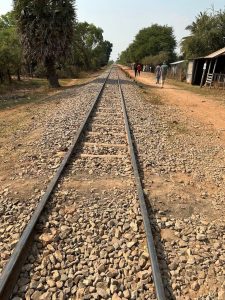
The loss of true analyst billets after the 2013 reorganization was not an internal personnel adjustment. It removed the investigative brain from a mission that depends on memory, geography, human networks, historical contradiction, and the ability to turn fragments into action. The Flynn and Stone case shows the cost. A functioning analytical system would have treated the witness as a perishable investigative asset, mapped every location in her account, built a link chart of every person and movement point, compared the story against Khmer Rouge activity, Lon Nol’s collapse, prison transfers, train routes, border corridors, prior reporting, and known case files, and then driven field activity accordingly.
That is not sophisticated intelligence work. It is the bare minimum standard of competent casework.
Without that capability, extraordinary leads become paperwork. With it, they become missions.
Vietnam-era cases are not abstract historical problems. First-generation witnesses are still alive. First-generation family members are still waiting. There are people alive today who can still point to prison sites, crash locations, execution areas, burial places, transfer routes, and village memories. To reduce investigation in that theater now is not merely bad planning. It is abandonment of the last living generation of evidence.
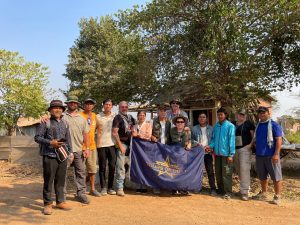
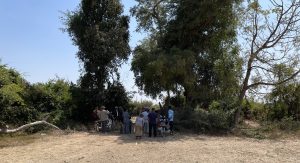
Tours of Duty entered the Flynn and Stone case because that kind of failure is intolerable. We did not treat the witness as a curiosity, a nuisance, or a threat to an established file. We treated her as a lead. Over the last year, Tours of Duty re-engaged the account, worked with the witness, and helped arrange for her to revisit the site where she says these events occurred. The story had to be put back into its proper geography because old cases are not solved by preserving assumptions in Washington. They are solved by testing memory against terrain, revisiting locations, listening to people who stayed quiet for decades, and allowing the evidence to either collapse or expand under disciplined investigation.
When the witness revisited the site, the story did not collapse. It expanded. Through Tours of Duty’s efforts, four additional witnesses have now been identified. Several new leads have emerged regarding the possible disposition of the three Americans and the unidentified European male. The geography is no longer theoretical. The village is no longer an abstraction. The account is becoming a case network.
That is what actual investigative progress looks like.
Not success in the shallow sense of declaring victory before the work is done. Success in the only sense that matters in a cold case: the lead is alive, the witnesses are being found, the story is being tested, and the family finally knows someone is pursuing the truth with urgency.
For Rory Flynn, that matters in a way no metric can fully capture. After years in which DPAA failed to provide even a single substantive update, she now knows her brother’s case is not merely sitting in a government file under the label of “active pursuit.” She knows people went back. She knows the witness was heard. She knows the village was revisited. She knows additional witnesses were found. She knows new leads are being followed. Most importantly, she knows Sean has not been reduced to a status line, a briefing note, or a historical mystery too inconvenient to disturb.
He is being looked for. That is what the government owed her. Tours of Duty gave her that.
The Flynn and Stone case is now more than an unresolved disappearance. It is a test of whether the accounting mission still means what the country says it means. If a living witness can come forward in a case of this magnitude and the lead can sit for years without meaningful pursuit, family notification, or transparent disposition, then the problem is not one bad decision. It is systemic. It is cultural. It is an agency confusing case management with casework, diplomatic comfort with mission success, and public language with actual pursuit.
The accounting mission will not be salvaged through ceremonies, polished talking points, carefully managed family briefings, or laboratory production metrics designed to create the appearance of momentum. It can only be fixed by restoring investigation to the center of the mission: true analyst billets, real cold-case teams, HUMINT collection, link analysis, witness exploitation, route reconstruction, independent review of stale assumptions, and field investigation driven by leads rather than what is easiest to recover or most convenient to brief.
Sean Flynn and Dana Stone deserve more than an old narrative. Rory Flynn deserved to be told. The unidentified American and the unidentified European in this account deserve to be identified. Their families, whoever and wherever they are, deserve to know whether their loved ones were part of this final chapter.
Tours of Duty cannot restore the years DPAA lost. We cannot bring back witnesses who may have died before anyone asked the right questions. But we can do what should have been done when this witness first came forward. We can follow the lead, test the account, support disciplined site validation, find the witnesses, build the case, and force the uncomfortable questions into the light.
Because the promise was never no man left behind unless the case is old. It was never no man left behind unless the witness is inconvenient. It was never no man left behind unless the truth disrupts the official narrative.
The promise was no man left behind — not when the case becomes politically uncomfortable, bureaucratically inconvenient, or too old to fit institutional priorities.
Sean Flynn, Dana Stone, and the other Americans in this account have waited long enough.