
The Grave They Would Not Dig Deep Enough

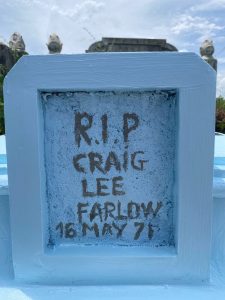
Chief Warrant Officer Craig Lee Farlow disappeared into the war on May 16, 1971.
He was serving with Company A, 101st Aviation Battalion, 101st Airborne Division, when his UH-1 helicopter touched down under fire in South Vietnam. According to DPAA’s public case profile, the pilot radioed that the aircraft was taking enemy fire and that the crew chief had been wounded. As the helicopter lifted off, it lost rotor power, crashed into the trees, and caught fire. Witnesses saw no survivors exit the aircraft. Enemy activity prevented an immediate search-and-rescue effort, and when a later ground search was conducted, the remains of all but one crew member could not be located.
That is the official outline. It is clinical, compressed, and familiar to anyone who has read enough POW/MIA case summaries from Vietnam: aircraft hit, crash, fire, no survivors observed, enemy activity prevented recovery, later search unsuccessful, remains not located. A man’s life becomes a paragraph. A family’s grief becomes a status line. A battlefield becomes coordinates. A missing American becomes an unresolved case.
But cases do not end because a government file stops moving.
More than fifty years later, Tours of Duty came into contact with a Vietnamese family who said they knew where Craig Farlow had been buried. Their account was not abstract. It was not a rumor drifting through generations with no human anchor. A member of the family claimed to have buried the remains more than half a century ago in the family plot. For decades, according to the family, they cared for that place with reverence.
That detail matters.
In Vietnam, care for the dead is not a casual gesture. Ancestor veneration and the tending of graves are deeply rooted cultural practices; Pew Research found that ancestor-veneration rituals are especially common in Vietnam, where 96 percent of adults reported burning incense in the past year and 90 percent reported offering flowers or lighting candles to honor ancestors. In many Vietnamese households and families, the dead remain spiritually present, remembered through altars, incense, offerings, anniversaries, and grave care. To tend a resting place is not merely to maintain a piece of ground. It is to preserve dignity, memory, and relationship.
This Vietnamese family was not caring for one of their own by blood. They were caring for an American.
They believed they had protected the resting place of Craig Farlow.
Last summer, while members of that family were visiting the United States, they met with Tours of Duty team members in New York. During that meeting, the family received a phone call from Vietnamese authorities. They were told DPAA would be coming to their site in two weeks to excavate the remains.
It would have been easy for fear to take over. The family had lived with this story for decades. They had tended the site. They had carried the memory. Now Vietnamese authorities and the American government were coming. Tours of Duty encouraged the family not to be afraid, to cooperate fully, and to support the process. If this was Craig Farlow, the goal was clear: he deserved to come home.
That is what the accounting mission is supposed to be.
A family comes forward. A site is identified. A witness who knows the burial is present. The government responds with seriousness, skill, humility, and urgency. Everyone involved understands the gravity of the moment. There is no room for procedural theater. There is only the obligation to do the work properly.
But according to information provided to Tours of Duty, that is not what happened.
DPAA went to the family plot. The man who said he buried Craig Farlow was present. The family cooperated. The site was available. The witness was there. The opportunity was real. According to the family the DPAA excavated to approximately 52 centimeters, then declared nothing found and mission complete.
The witness told them to keep digging.
He reportedly explained that the burial was deeper than that. More than fifty years had passed. Soil changes. Graves settle. Surfaces shift. Agricultural activity, erosion, deposition, root growth, compaction, and landscape change can alter what a burial site looks like decades later. In clandestine remains recovery, depth is not a bureaucratic convenience. It is an investigative question. A shallow test may be useful as a starting point, but it cannot substitute for a burial-specific recovery strategy when a firsthand witness is standing there telling the team the remains are deeper.
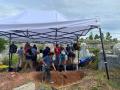
DPAA Excavation of the reported burial site
The reported 52-centimeter limit is especially troubling because, in an archaeological context, such a depth is more consistent with a shallow test or limited excavation unit than with a serious attempt to exhaust a clandestine burial lead. Archaeology is not simply digging until an arbitrary measurement is reached. Proper recovery depends on stratigraphy, soil disturbance, witness information, grave-shaft recognition, feature boundaries, associated artifacts, and the context of the site. In clandestine grave recovery, the point is not to satisfy a pre-set depth. The point is to follow the evidence.
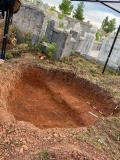
Photos of site supplied by witness family
DPAA’s own public materials acknowledge that Vietnam recovery efforts involve investigation, excavation, and the transfer of recovered remains for laboratory analysis, and public imagery of DPAA work shows soil excavation and screening as part of recovery operations. Yet in this case, according to the family account provided to Tours of Duty, the agency stopped at a shallow depth despite the presence of the very man who said he buried the missing American and who told them they had not gone deep enough.
DPAA refused to continue. It packed up and left.
If that account is accurate, this was not merely a failed dig. It was a failure of posture. It was a failure to listen. It was a failure to understand that a witness is not a decorative presence at a recovery site. A witness is evidence. A witness who claims to have buried the remains is not background noise. He is the investigative center of gravity.
The family was devastated. They had not treated Craig Farlow as an abandoned foreigner. They had treated him as a human being worthy of care. They had kept his place. They had remembered him. They had cooperated when authorities came. They had watched the American government arrive at the place they believed held one of its own sons, dig only so far, stop, and leave.
According to the family, the conclusion they reached was heartbreaking: if America did not want its son back, they would continue to honor him.
So they did.
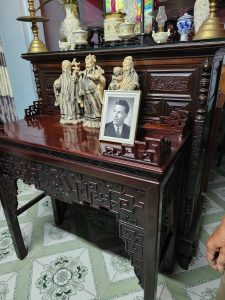
They built a small memorial to him. They keep his photograph in their home. In a Vietnamese family’s private space, an American soldier missing for more than fifty years is not a case number. He is not a failed excavation. He is not a budget problem, a scheduling problem, a diplomatic inconvenience, or a line item in a production metric.
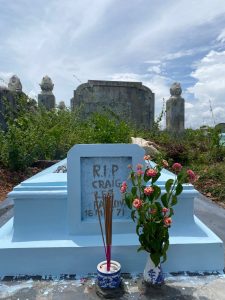
He is remembered.
That should punch every American in the chest.
A Vietnamese family, in a country where his helicopter crashed during war, has honored Craig Farlow with the reverence owed to the dead while the United States government agency responsible for bringing him home allegedly stopped short of the depth identified by the witness and walked away.
That is the accounting mission turned inside out.
The failure here is not that every lead guarantees a recovery. It does not. No serious investigator would claim that. Witnesses can be mistaken. Sites can shift. Burials can be disturbed. Remains can degrade. The jungle, the soil, the passage of time, and the violence of war all complicate the work. But that is precisely why the work must be rigorous. When a family comes forward, when a burial witness is present, and when that witness says the remains are deeper, a serious accounting system does not satisfy a shallow procedural threshold and declare the matter complete. It adjusts, expands, tests, documents, and exhausts the lead.
That did not happen here.
And Craig Farlow’s case is not an isolated moral failure. It is a symptom of a larger collapse inside the accounting mission.
The federal government has known for years that the POW/MIA accounting system was structurally troubled. In 2013, the Government Accountability Office found that the Department of Defense POW/MIA accounting community had a fragmented organizational structure and reported that fragmentation had exacerbated leadership weaknesses. That same year, the Senate held a hearing titled Mismanagement of POW/MIA Accounting to examine dysfunction inside the system responsible for the missing. DPAA was later created through the merger of DPMO and JPAC, and that reorganization was presented as the answer. But combining troubled entities does not, by itself, create investigative competence.
The deeper problem is that America’s accounting mission has been hollowed out at the exact point where it most needs strength: case investigation. DPAA has more than 800 employees, yet according to information provided to Tours of Duty, only two personnel function under the title of “analyst,” and even those are not true case-analysis billets in the investigative sense. They perform primarily archival and historical work. Archival research is important, but it is not cold-case analysis. It does not replace HUMINT development, link analysis, witness correlation, route reconstruction, pattern analysis, or the disciplined testing of conflicting narratives.
This is not a minor staffing gap. It is the missing engine of the entire accounting mission.
A real case analyst connects fragments: a crash report with questionable coordinates, a family-held memory, a Vietnamese witness, a village name rendered three different ways, an old excavation record, a terrain feature, a burial account, and a prior lead dismissed because it did not fit the file at the time. Analysts turn scattered information into investigative direction. Without that function, the system does not truly investigate. It inventories.
The absence of that capability has consequences everywhere. Without analysts, leads are not triaged properly. Witnesses are not prioritized while they are still alive. Contradictory reporting is not reconciled. Old assumptions are not challenged. Field teams are not deployed against the strongest case questions. Families are not told what new information means because no one has fully analyzed its significance. The lab receives what the system can already reach, instead of being guided toward what the investigation has uncovered.
That is how a living witness becomes a document. That is how a burial site becomes a shallow dig. That is how a family plot becomes a box checked. That is how a case marked “active” becomes administratively alive but investigatively dead.
When analysis is weak, the mission becomes reactive instead of strategic. HUMINT is neglected. First-generation witnesses die without being debriefed. Patterns across cases are missed. Villages, transfer points, crash sites, burial sites, and family-held memories remain disconnected dots. Forensic priorities are set without investigative depth, allowing the lab to become the center of gravity rather than a supporting function. The mission begins selecting cases based on what is easiest to produce rather than what is most urgent to pursue.
That is not accounting. That is triage by convenience.
And the budget choices now tell the same story. According to information discussed in FY2027 planning, DPAA allocated exactly zero dollars to case investigations in Vietnam. Not reduced funding. Not limited funding. Zero. At the same time, DPAA’s Joint Field Activities in Vietnam are expected to continue, but at roughly an 80 percent reduction from prior-year theater activity. With an approximate 11 percent budget reduction last year, DPAA did not simply tighten administrative costs or protect the field investigation pipeline. According to information provided to Tours of Duty, the agency reduced overall field operations by an estimated 40 percent while prioritizing National Cemetery disinterments.
Disinterments have a place. They can bring long-overdue answers to families, and they should not be dismissed. But when disinterments become the institutional priority at the expense of case investigation, HUMINT development, witness exploitation, and overseas fieldwork, the mission has been inverted. The government is no longer asking first, “Where are the missing?” It is asking, “Where can we get the easiest count?”
In a theater where first-generation witnesses are still alive, where first-generation family members are still waiting, and where unresolved cases still depend on memory, terrain, and human testimony, starving case investigation is not austerity. It is abandonment.
Craig Farlow’s case shows what that abandonment looks like at ground level. It looks like a family that cared. It looks like a witness who said, “He is deeper.” It looks like an excavation that stopped short. It looks like a government team leaving while the people who had honored an American for half a century were left standing at the place they believed he rested.
Tours of Duty entered this work because that kind of failure is intolerable. We do not confuse a case file with a case. We do not treat witnesses as inconveniences. We do not believe that “active pursuit” means activity where it is easiest and retreat where it is hard. In the Farlow matter, Tours of Duty built trust with the family, met with them in the United States, encouraged cooperation with DPAA and Vietnamese authorities, and continued to honor the possibility that the family’s account may hold the key to bringing an American home.
That is success, even before the final answer is known.
Success in a cold case is not limited to an identification. It begins when a lead is preserved, when a witness is heard, when a family is trusted, when a site is not forgotten, and when a missing man is treated as recoverable rather than administratively inconvenient. Success is refusing to let a failed government attempt become the end of the story.
Craig Farlow deserves more than that.
He deserves more than an old crash summary. He deserves more than a shallow excavation. He deserves more than a government agency willing to declare “nothing found” while the man who says he buried him is standing there telling them to keep digging. He deserves a serious case investigation, a serious recovery strategy, and a government willing to exhaust every avenue before it walks away.
And the Vietnamese family that honored him deserves better, too.
They deserve to know their reverence was not wasted. They deserve to know America understands the weight of what they carried. They deserve to know that the photograph in their home, the memorial they built, and the grave they tended for more than fifty years matter to the country whose son they tried to protect.
Tours of Duty cannot undo what DPAA failed to do at that site. We cannot restore the years lost to delay, shallow assumptions, or institutional convenience. But we can continue to follow the lead. We can continue to work with the family. We can continue to press for the kind of investigation Craig Farlow deserved the first time. We can continue to insist that a witness standing at a burial site is not a procedural inconvenience, but a moral and investigative obligation.
The promise was never no man left behind unless the grave is hard to reach.
It was never no man left behind unless the witness complicates the plan.
It was never no man left behind unless the recovery fits the production model.
The promise was no man left behind.
Craig Farlow has waited long enough.