Chorlins, Richard Refno 1549
Case Closed?
Captain Richard David Chorlins has already been counted.
That is the first problem.
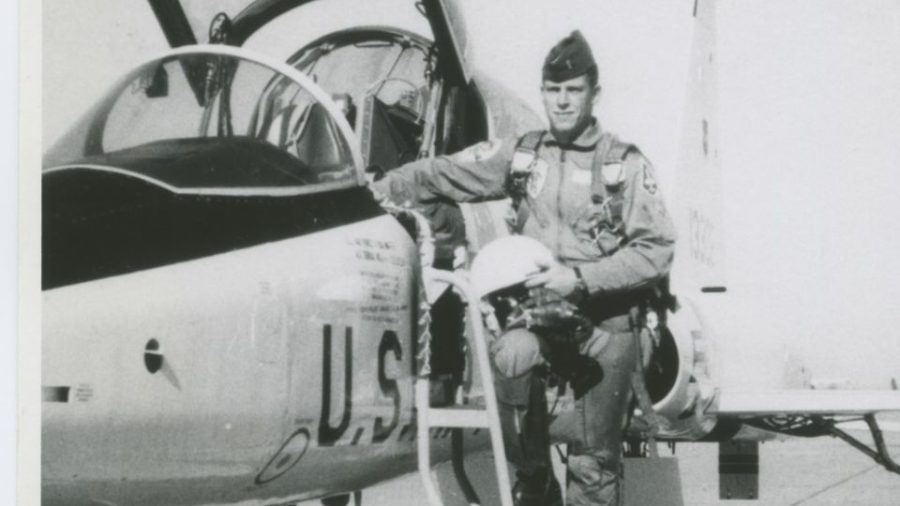
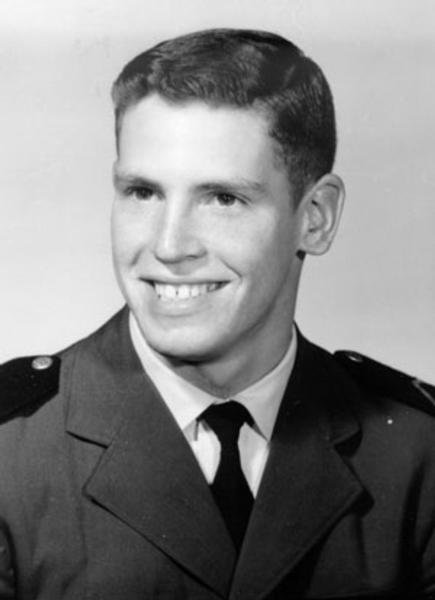
Captain Richard David Chorlins was not a clerical entry in a closed file. He was a United States Air Force pilot assigned to the 602nd Special Operations Squadron at Nakhon Phanom, Thailand, flying the A-1H Skyraider over one of the most dangerous battlespaces of the Vietnam War. DPAA’s public profile states that on January 11, 1970, he was the lead aircraft in a two-plane combat mission over Laos when his Skyraider crashed into a mountainside while attacking enemy targets. Other public accounts describe his aircraft as being struck by ground fire during a night mission over the Ho Chi Minh Trail. He was only 24 years old, a 1967 graduate of the Air Force Academy, and he was posthumously promoted to captain.
The A-1 Skyraider was not a sleek, distant, push-button weapons platform. In Vietnam, it became legendary for low, dangerous, close-in flying. Whether attacking targets, suppressing fire, or supporting the broader air war over Laos, Chorlins served among men who accepted extraordinary risk in hostile skies so others could complete the mission and, when possible, come home.
That is why the government’s treatment of his case is so hard to reconcile with the language of honor it uses around the missing.
In 2003, JPAC received an anonymous submission in the mail: a bone fragment roughly the size of a fingernail. At the time, the technology needed to make a reliable DNA identification from such a small sample was not yet available. More than a decade passed before the science caught up. In 2013, with the technology finally in hand, DNA experts later described the chance of making an identification from that fragment as less than seven percent. Somehow, against those odds, the identification was made, and the case was administratively closed.
But how does a fingernail-sized bone chip become the fullest possible accounting of a man?
How does one fragment become the end of the government’s curiosity? How does a sample small enough to disappear in a palm become the basis for closing the file on a pilot, a brother, a son, and a husband whose final circumstances may still hold unanswered questions?
Identification is not the same as full accounting.
A bone chip may establish a name. It does not necessarily establish the whole truth. It does not prove that additional remains are not recoverable, that personal effects do not exist, or that witnesses, families, or local custodians cannot still point the way to what was left behind.
The phrase “fullest possible accounting” should mean something more than administrative closure based on the smallest survivable fragment. It should mean the government has exhausted every reasonable avenue to understand what happened, recover what can be recovered, notify the family, and honor the whole person — not just satisfy the minimum threshold required to move a case from missing to accounted for.
That is what makes what happened next so troubling.
In 2023, Tours of Duty was made aware of a Vietnamese family who claimed they had what the government should have wanted most: remains, identification material, and a blood chit connected to Chorlins. The family was willing to speak, cooperate, and turn over what they had.
In 2024, Tours of Duty went to Vietnam to meet them.
We were accompanied by a member of Vietnam’s secret police. That detail is important because this was not a reckless back-channel adventure or a rogue attempt to bypass authorities. Vietnamese security was present. The family was present. The potential evidence was present. The opportunity was real.
Tours of Duty contacted DPAA’s office in Washington, D.C., which had been notified months in advance that we would be traveling to Vietnam. We were then connected with the Detachment Commander in Hanoi and the Indo-Pacific Director.
If ever there were a moment for urgency, this was it. A family was prepared to turn over potential remains and materials tied to an American the government had already counted as accounted for. Vietnamese authorities were aware. A path existed.
Instead, Tours of Duty was told to stand down. DPAA would not send anyone from its command center only a few hours away. We were told the case was considered closed and DPAA “would not spend any more money on the case.”
That explanation might sound bureaucratically defensible from a conference room, but it collapses under the facts on the ground. Tours of Duty was not asking DPAA to launch a million-dollar excavation, mount a major deployment, or open a new Joint Field Activity. What was required was a lawful pathway, a short trip, and the will to receive what a cooperating family was prepared to turn over.
Return-on-investment logic may belong in a procurement spreadsheet. It does not belong in a decision about whether to receive potential remains from a willing family. It does not belong in a mission that exists because the country promised its warfighters they would not be abandoned when the fighting ended.
How does a case become too closed to investigate when a family is standing there with potential remains? How does “we already counted him” become more important than “there may be more of him to bring home”?
The Vietnamese security official offered a solution. If Tours of Duty could produce a memorandum of understanding or authorization from DPAA, we would be allowed to transport the remains to the Detachment in Hanoi. Chorlins’ sister was contacted immediately and signed our release. We requested the needed authorization from DPAA.
We were immediately denied. We were told to stand down and not destroy fifty years of diplomacy.
No one was asking DPAA to abandon diplomacy. No one was asking DPAA to violate Vietnamese sovereignty. No one was asking DPAA to authorize chaos. The request was narrow: allow a lawful transfer of potential remains through the Detachment in Hanoi.
If diplomacy cannot survive the dignified transfer of possible American remains from a willing family through a lawful pathway, then the problem is not Tours of Duty. The problem is a bureaucracy that has mistaken caution for mission success.
Tours of Duty left Vietnam with a promise to the family that we would return. We have maintained contact. We also attempted to turn over family contact information and leads to DPAA. It took days for anyone from the Detachment to call back. According to the family, no one from DPAA or the Detachment has returned.
To this day, DPAA publicly denies ever having contact with Tours of Duty on this matter. Tours of Duty retained the email thread with DPAA and the Detachment. We retained body-camera footage from that day. We retained recordings of the calls. The paper trail exists. The recordings exist. The family exists. And Chorlins’ sister is still waiting.
Richard Chorlins’ sister is now 83 years old. She has been briefed by Tours of Duty. She knows what we did. She knows what was offered. She knows what DPAA refused. She knows the government has not so much as made a phone call to her about this incident. That is a statutory and moral failure.
Families of the missing are not decorations for annual briefings. They are not to be managed with sanitized status updates while the government withholds meaningful information about leads, potential remains, or decisions made in their loved one’s case. DPAA’s mission includes providing families available information about loss incidents, search and recovery efforts, and current status.
In the Chorlins case, the family deserved notification. The lead deserved documentation. The refusal deserved written justification. Instead, the case remained closed. This is the deeper disease inside the accounting mission: administrative closure has become a substitute for actual pursuit.
A closed case should not mean closed eyes. It should not mean closed ears. It should not mean that new evidence, new remains, new witnesses, or new family-held materials are treated as threats to the bureaucracy’s finality. In cold-case work, closure is not a shield against new information. It is a status that must remain vulnerable to truth.
This is not an argument against the accounting mission or the people who have dedicated their careers to it. It is an argument that the mission cannot survive if administrative closure becomes more important than new evidence.
The government should welcome evidence that complicates its assumptions. It should have a transparent mechanism for outside organizations, witnesses, foreign families, veterans, researchers, and next of kin to submit leads or potential remains. It should have a mandatory review clock. DPAA should be required to accept, reject, or delay action on a lead within a specified period of time — and it should have to provide a written justification.
If a lead is rejected or delayed, there must be an escalation pathway to someone outside the immediate decision chain who can make an independent determination. Most importantly, families must be notified. That is not radical. That is basic accountability.
Because without such a pipeline, the same pattern repeats. A witness comes forward. A family offers help. A nonprofit identifies a lead. A foreign national risks exposure. The agency refuses, delays, denies, or disappears behind process. Then, years later, it tells Congress, families, and the public that the mission is active.
Active where? Active for whom? Not for Richard Chorlins’ sister, who was never told. Not for the Vietnamese family that was willing to turn over what they had. Not for the Tours of Duty team told to stand down while potential remains were within reach. Not for the accounting mission, which should be measured by the pursuit of truth, not the protection of closed files.
Instead, DPAA appears to have protected the status of the case rather than pursuing the substance of the lead. That is not accounting. That is triage by convenience.
The Chorlins case also has to be understood against a larger and deeply troubling pattern: DPAA’s apparent slow withdrawal from Vietnam-era conflict cases. In Cambodia, only partner-driven efforts remain in motion according to the record and recent statements made by DPAA officials, while direct U.S. investigative capacity has been sharply limited. In Vietnam, FY2027 planning reportedly allocates no funds for case investigations at all. Not reduced funding. Not delayed funding. No dedicated investigative funding. At the same time, Vietnam Joint Field Activities are expected to continue at a dramatically reduced level from prior years.
This is critical because Vietnam-era cases are still alive in the only way cold cases can be alive after fifty years: through witnesses, families, memory, terrain, and leads that have not yet been fully tested. First-generation witnesses are still alive. First-generation family members are still waiting. Vietnamese families still hold stories, locations, artifacts, and in some cases, they claim, remains. To retreat from investigation now is to abandon the last living generation of evidence.
DPAA can still point to activity. It can still brief cooperation. It can still cite partnerships, laboratories, disinterments, and field events. But activity is not the same as pursuit. A Joint Field Activity without a funded investigative pipeline is motion without a mission. A partner presence without analyst-led case development is not a substitute for U.S. responsibility. A closed file does not absolve the government from acting when new evidence appears.
This is the quiet danger: the Vietnam-era accounting mission may not end with a public announcement. It may end by attrition. A little less fieldwork. A little less investigation. A few more cases treated as too old, too difficult, too acidic, too expensive, or already counted. A gradual shift toward what is easiest to identify rather than what remains morally necessary to pursue. That is how a promise dies bureaucratically — not with a declaration, but with a budget line.
Tours of Duty’s role in this story shows what real pursuit looks like. We did not discover this lead and sit on it. We traveled to Vietnam. We met the family. We worked in the presence of Vietnamese security. We contacted DPAA immediately. We obtained family authorization. We asked for a lawful transfer pathway. When DPAA refused, we preserved the record. We briefed the family. We maintained contact. We promised to return.
That is success, even in the face of government refusal.
Success in the accounting mission cannot be measured only by final identification, especially when the government can define a case as closed and then refuse to examine what comes next. Success begins when a lead is preserved, when a family is heard, when a witness is respected, when potential evidence is not abandoned, and when the next of kin is told the truth.
Success is refusing to let a bureaucratic denial become the last word.
Richard Chorlins gave everything for this country. His sister has waited more than half a century for the full truth of his case. If additional remains, identification material, or personal effects exist, they should not be left in private hands because the government decided the case no longer justified money. They should not be stranded because an agency feared disrupting its diplomatic script. They should not be ignored because a prior identification made the file easier to close.
The promise was never no man left behind unless he has already been partially identified, unless the case is administratively convenient, unless the evidence fits the budget, or unless the agency’s prior conclusion remains undisturbed.
The promise was no man left behind.
Richard Chorlins’ sister deserved a phone call. She deserved transparency. She deserved an agency willing to say, “We will look.” She deserved a system that could receive a lead, make a decision, justify that decision, and allow independent escalation when the stakes were this high.
Tours of Duty cannot undo DPAA’s refusal in Vietnam. But we can preserve the record. We can continue working with the family. We can continue pressing for a transparent lead pipeline. We can continue demanding that closed cases remain open to truth.
And we can keep the promise we made when we left Vietnam:
We will return.
Bring them home. Or send us back.