
The OSS Sent Her Back Into France on One Leg
The American the Gestapo called the most dangerous spy of the war, and almost no one remembers her name.
In the late summer of 1941, a tall American woman stepped off a train in Lyon carrying press credentials from the New York Post and a limp she took some care to hide. The credentials were a fiction. The limp was not: below her left knee she wore a seven-pound wooden leg she had named Cuthbert, the price of a hunting accident years before. The United States Foreign Service had already told Virginia Hall of Baltimore that a woman, and an amputee at that, had no place in its ranks. Britain’s Special Operations Executive, with a war to fight and fewer scruples, had reached the opposite conclusion. They sent her into Vichy France to do the one thing the Germans could not forgive: build an army out of ordinary people.
She was extraordinarily good at it. Operating out of Lyon under a shifting set of names, Marie, Germaine, Philomene, she assembled safe houses, couriers, forgers, and escape lines, moved downed Allied airmen toward the Pyrenees, and kept London supplied with the one thing it lacked in occupied France: a working radio and a steady hand on the key. To the French Resistance she became la dame qui boite, the lady who limps. To the Germans, who could feel her work long before they could name her, she became a ghost worth a great deal of manpower to catch.
The Mauzac break
In the autumn of 1941, Hall declined an invitation to a gathering of SOE agents in Marseille; her instincts told her it was careless, and her instincts were right. The police raided it and took twelve of her colleagues, who were eventually caged at Mauzac internment camp near Bergerac. That raid left Hall the only SOE agent still at liberty in the whole of France, and the only one who could still reach London. A lesser operative would have counted her blessings and kept her head down. Hall decided to get all twelve out.
Over months she ran one of the most audacious prison breaks of the early war almost entirely by remote control. She recruited the wife of one of the prisoners as a go-between, passed messages and tools into the camp hidden inside tins of sardines, and had an impression of a door lock turned into a working key the same way. She bought safe houses and transport, acquired two French police uniforms for the getaway, and paid off a guard to look the other way. On the night of 15 July 1942, the twelve walked out. Several of them crossed back into France later in the war to lead networks of their own. The Germans were apoplectic, and they finally understood that the limping woman in Lyon was not a nuisance but a threat.
The most dangerous of all Allied spies
The man who took it personally was Klaus Barbie, the Gestapo chief of Lyon whose name is still a byword for torture in France. He put her face on wanted posters and gave his men a standing order that has survived in the record: she is the most dangerous of all Allied spies, find her and destroy her. In cruder moments he said he would give anything to get his hands on that limping woman. He never did.
In November 1942, with American troops landing in North Africa and the Germans pouring into the unoccupied south, the net finally drew tight, and Hall ran the only direction left to her: up. She crossed the Pyrenees into Spain on foot, roughly fifty miles through deep snow over a high winter pass, dragging Cuthbert the whole way. Somewhere on the climb she radioed London that Cuthbert was giving her trouble; London, with no idea Cuthbert was a leg, wired back that if he was being difficult she should eliminate him. She reached Spain half-dead, was promptly arrested for crossing without papers, and spent six weeks in a Spanish prison before London pried her loose. She had escaped the Gestapo and the mountains in the same month. By any reasonable measure her war was over.
She went back
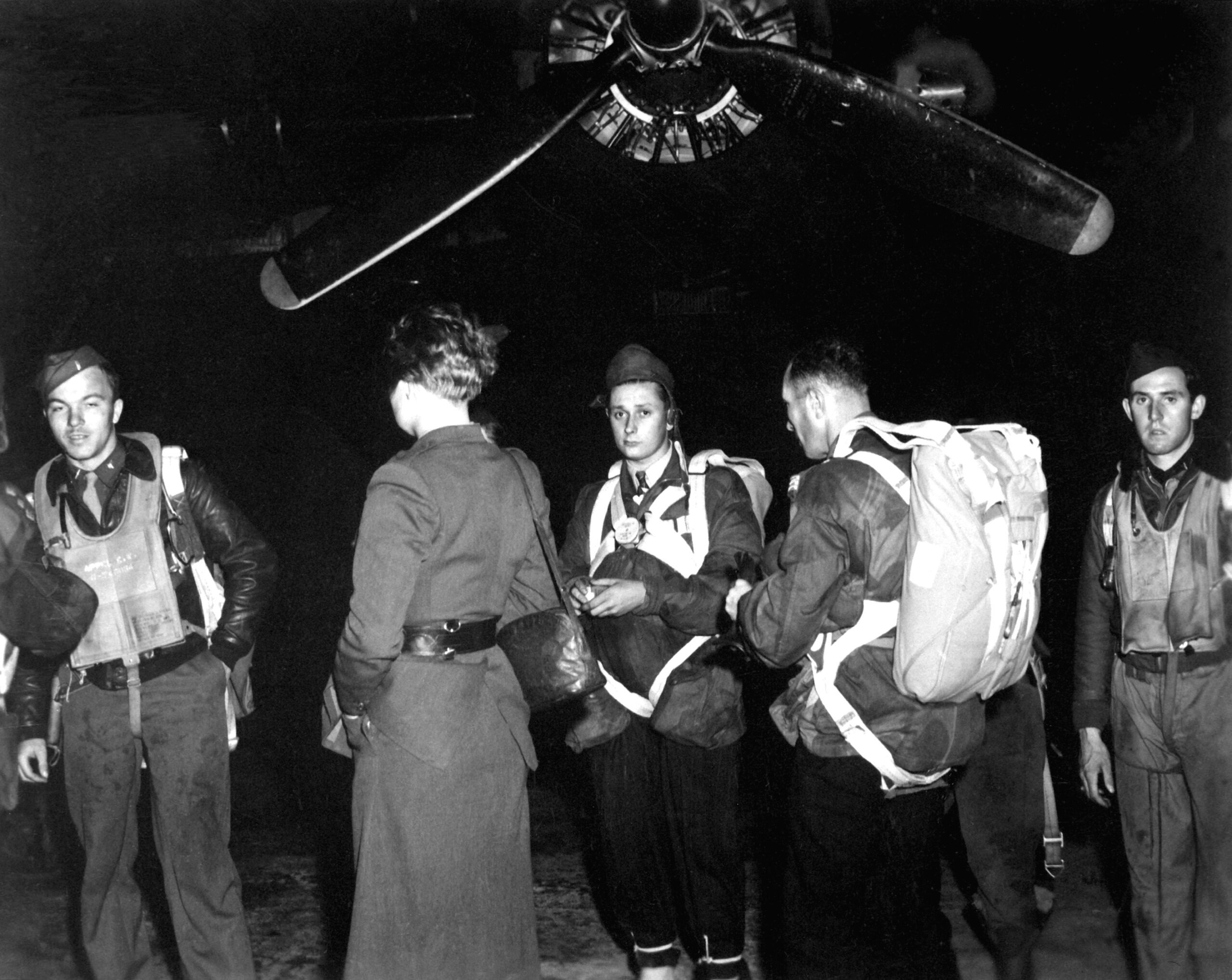
She would not let it be. The British judged her too badly burned to send into France again, so in early 1944 Virginia Hall walked into the newly formed American Office of Strategic Services and volunteered to go straight back to the country that most wanted her dead. This time she disappeared completely. She aged herself thirty years, dyed her hair a dirty grey and pinned it back hard, learned to pencil in wrinkles, padded her athletic frame under heavy skirts and sweaters, and turned her limp into an old woman’s shuffle. She even had a London dentist grind her fine American teeth down to a peasant’s. As Marcelle Montagne, a dairymaid in the mountains of the Haute-Loire, she tended cows, made and sold cheese, and more than once sold it to German soldiers while listening to every word they said.
From a string of barns and farmhouses she ran her suitcase radio, armed and trained the local maquis, and reported to London nearly every day. By the weeks around D-Day her ragged band had grown into a force of more than fifteen hundred. Her circuit blew the railroad bridge at Chamalieres, cut the lines the Germans needed to move men to Normandy, and cleared her corner of central France of the enemy before the U.S. Army ever arrived.
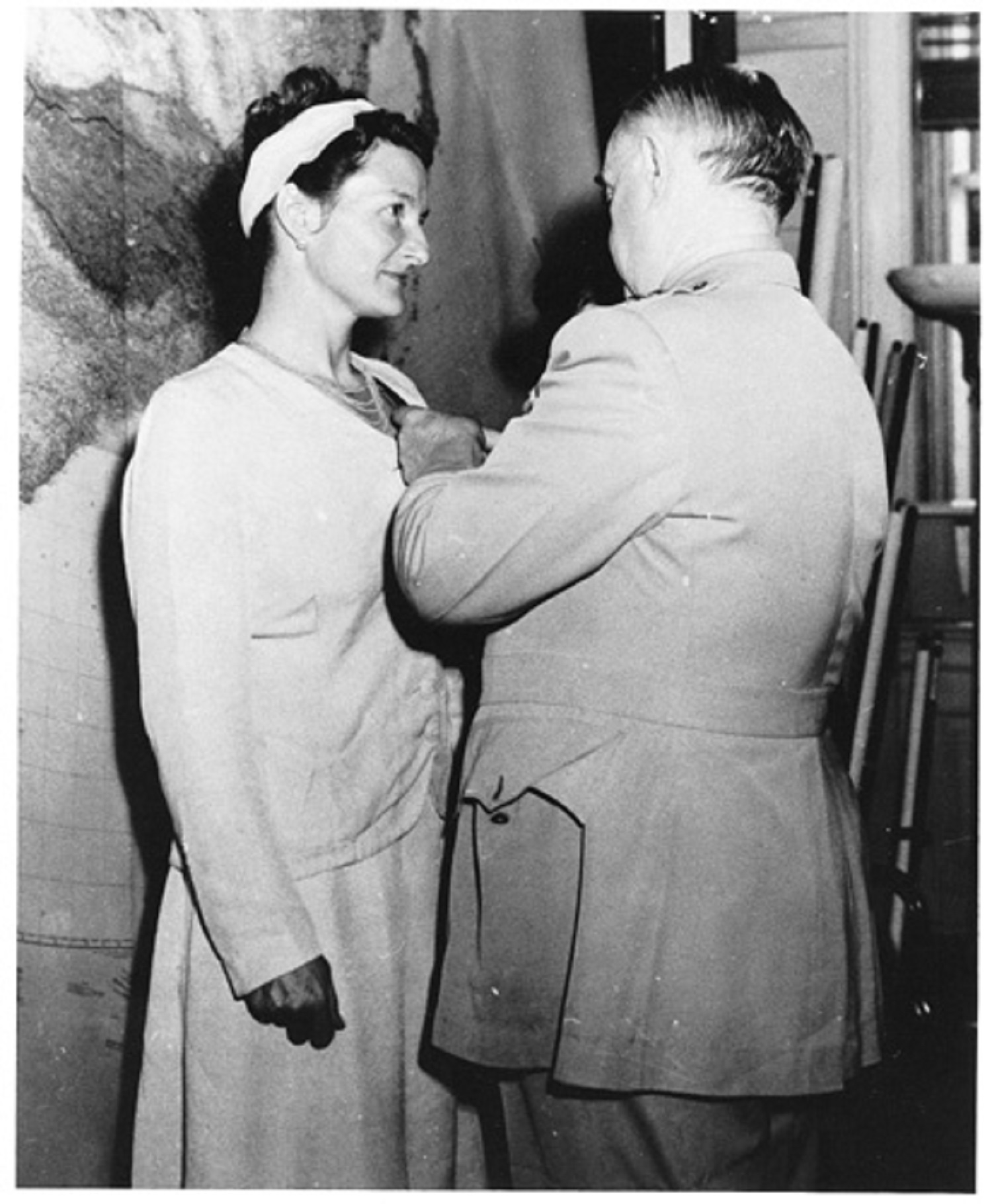
When it was finished, Virginia Hall became the only civilian woman of the Second World War to receive the Distinguished Service Cross. President Truman wanted to present it himself, before the cameras. She refused, because she intended to keep working and a photograph would end her, and took the medal in a quiet office from Wild Bill Donovan with only her mother looking on. ‘Not bad,’ she is supposed to have said, ‘for a girl from Baltimore.’ Then she went back to the shadows for another twenty years, left no memoir, gave no interviews, and told her own family almost nothing. That is the real reason you have never heard of her.
The mission didn’t end in 1945
Eighty-three years after the Allied invasion of Normandy, Americans who fought to liberate Europe are still missing. And the intelligence tradecraft that Virginia Hall helped pioneer remains central to the work of finding them.
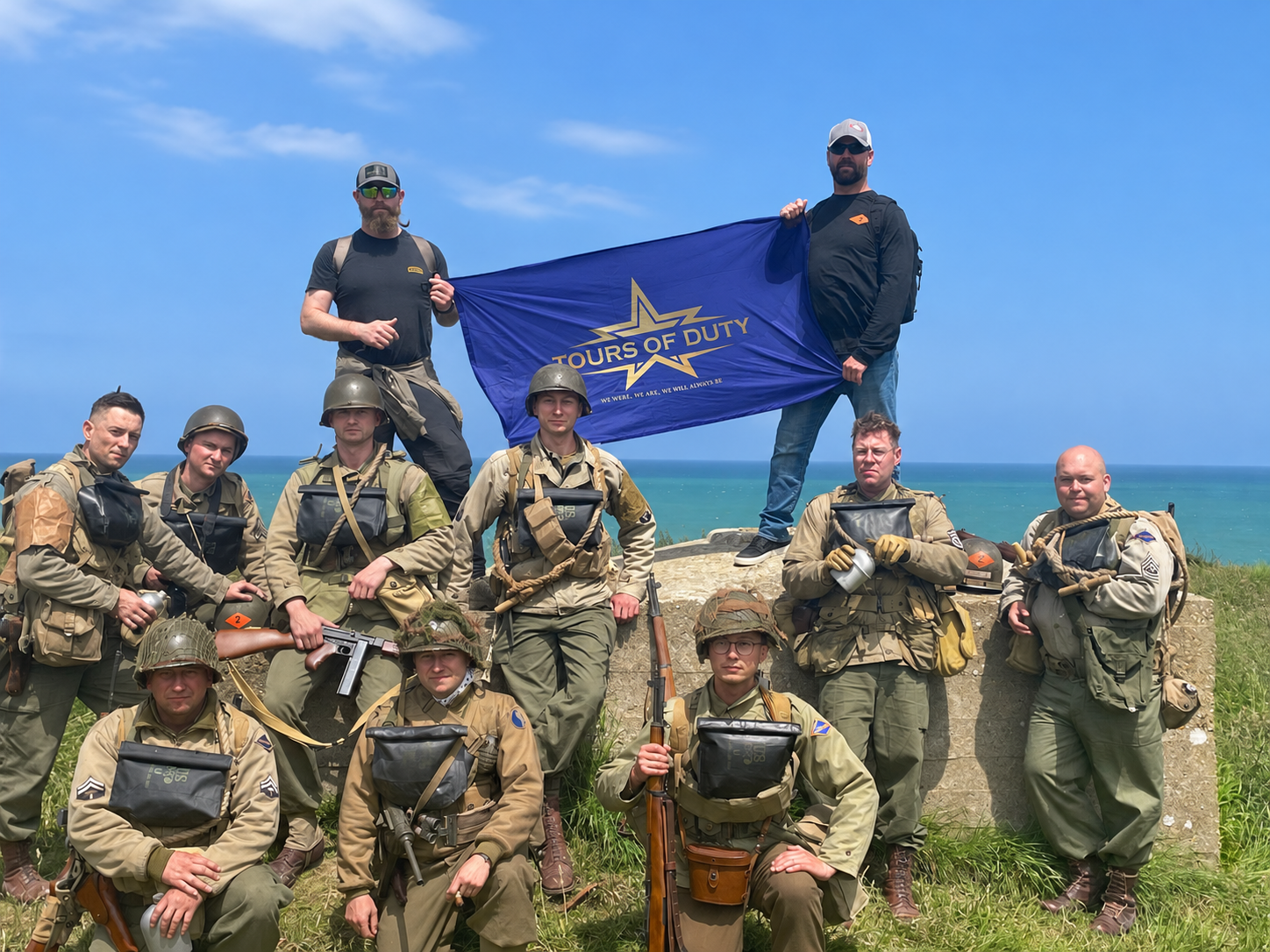
Tours of Duty, a veteran-led nonprofit dedicated to locating America’s missing servicemembers, is carrying that mission forward. We run those cases through two systems named Artemis and Diana, after Hall’s own war names.
And in June 2027, we are opening that world to just 25 couples.
D-Day 83 | Normandy, France | June 1-10, 2027
Join our team for an exclusive, ten-day hosted experience that takes you beyond the history of D-Day and into the work that remains unfinished.
Go into the field alongside our veterans as they investigate real cases of Americans still missing in Normandy. Explore the battlefields, beaches, gun batteries and hedgerows through military staff rides that reveal the strategy, decisions and human cost behind the invasion.
Step into the command room during Midnight Ops, an immersive, time-sensitive simulation that puts the decisions of Allied commanders in your hands on the eve of D-Day.
And on June 6, stand as invited guests at the official 83rd-anniversary commemoration at the Normandy American Cemetery.
This is Normandy through the eyes of those who have served, with extraordinary access and experiences unavailable through commercial tour operators, and a mission that connects the events of 1944 to the work still being done today.
History is something most people travel to Normandy to discover. You have the opportunity to become part of its unfinished story.
25 couples. Ten extraordinary days. One historic anniversary.
Secure your exclusive access with a $999 refundable deposit.